
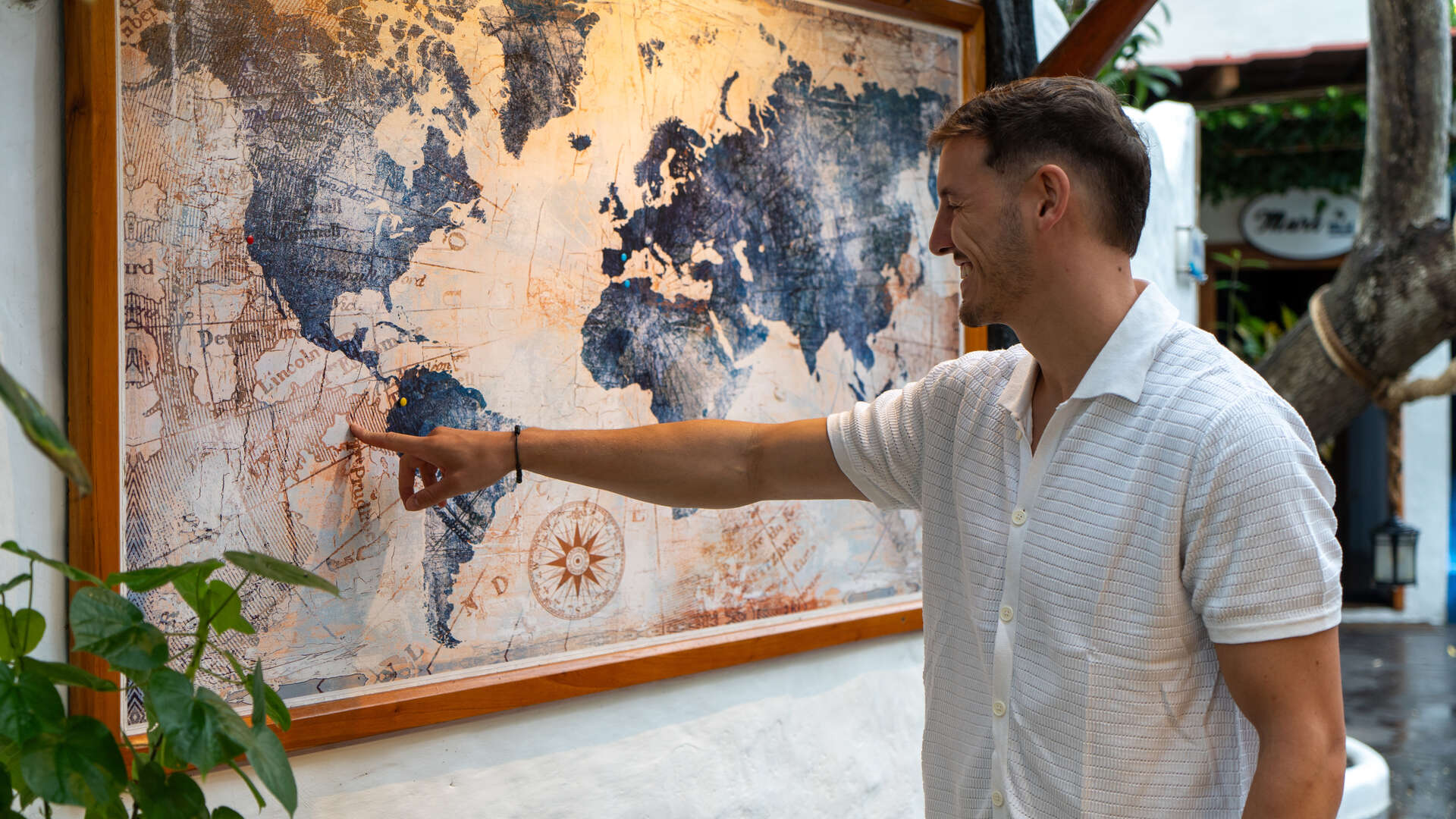
At Blu, we have a custom: before talking about plans or upcoming adventures, we remember something essential. These islands hold millions of years of history.
What surrounds you is not just an endless ocean or breathtaking landscapes. It is one of the oldest, most fragile, and extraordinary ecosystems on the planet. And there is something we learn every day: those who experience Galápagos most deeply are not the ones who see the most, but the ones who arrive with intention.
The ones who walk slowly and observe calmly. The ones who understand that simply being here is, in itself, a privilege.
The conscious traveler experiences Galápagos differently: with presence, gratitude, and the understanding that it must be protected.
A biodiverse destination admired by the world
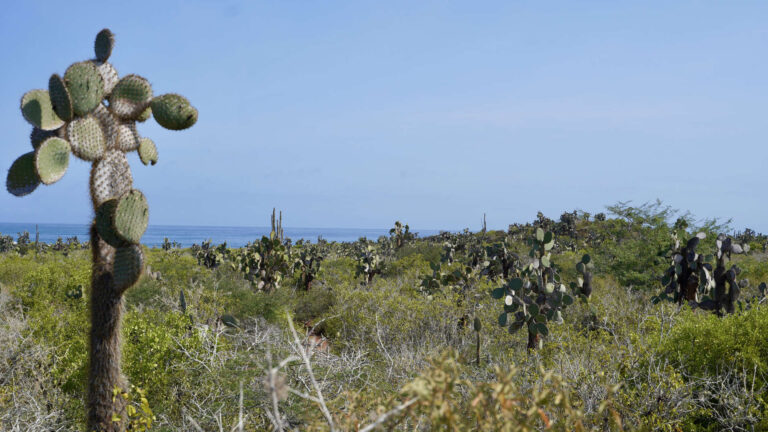
In May, the Month of Biodiversity invites us to pause and reflect on the place we inhabit. But in the Galápagos Islands —and in every natural ecosystem that still endures— this awareness is not just an annual gesture.
It is a way of living.
A place that challenges everything we know
Since their discovery in 1535 — when ocean currents accidentally diverted Bishop Tomás de Berlanga’s route toward these shores — to Charles Darwin’s famous visit in 1835, the Galápagos have fascinated and puzzled the world. And they still do.
Today, figures like Mark Zuckerberg, Jeff Bezos, and Leonardo DiCaprio have recently visited these islands, placing Galápagos at the center of the global conversation. And while every visit brings more travelers closer to this volcanic archipelago, at Blu we believe the most important question is not who comes — but how we all arrive.
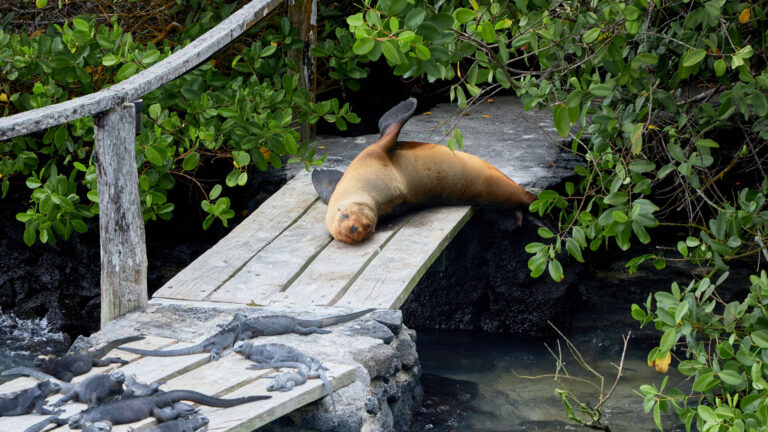
Because here, the animals do not run away. They are not afraid. They look directly into your eyes. The reason is as fascinating as it is delicate: they evolved in complete isolation, without natural predators. That is why they are unique. And that is also why they are deeply vulnerable.
A disturbed nest. A damaged mangrove. An animal losing its natural behavior because of human interaction. These are silent losses that do not always have a way back.
And you do not have to go far to understand this. Beside Blu, the mangroves of Santa Cruz offer a unique window into one of the islands’ most vital ecosystems — a refuge for baby sharks, coastal birds, and marine life in its earliest stages. A place where nature works quietly, and where simply walking slowly is enough to understand why it deserves protection.
Understanding this is not meant to create fear — it is meant to give meaning and weight to every step you take on these islands. Because when you truly understand what is in front of you, the experience changes completely.
What makes a difference as a traveler?
These are our recommendations, from the inside:
1. Choosing wisely is also a way of protecting
One of the most important decisions happens before you even arrive. Choosing where you stay and who guides your journey defines the impact of your trip.
Certified guides, authorized vessels, and responsible practices are not details: they are the foundation of a conscious experience.
At Blu, we understand travel through regenerative tourism: a way of experiencing a place that not only seeks to preserve it, but to actively contribute to it. Every stay helps us continue protecting the mangroves around us, supporting their balance through ongoing conservation efforts.
2. Observe without interfering
Keeping at least two meters away from wildlife is not an arbitrary rule or a formality. It is wisdom built through decades of research and conservation.
A sea lion posing for your photo is not being friendly: it is being tolerant. Touching it can transmit bacteria and diseases it has no defenses against, or even cause it to be rejected by its colony.
In Galápagos, distance is not a barrier. It is an act of love for the planet.
3. Your sunscreen leaves a trace too
Many sunscreens contain chemicals that damage coral reefs.
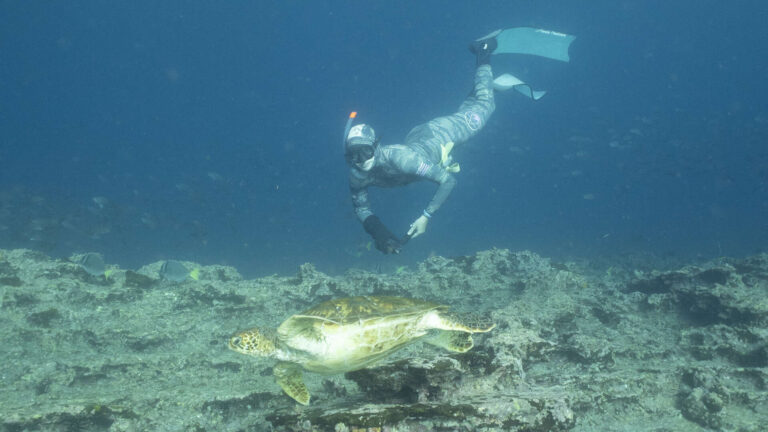
Choosing a mineral sunscreen before snorkeling may seem like a small gesture, but it has a real impact.
4. Travel light on plastic
Bring your reusable water bottle. Avoid single-use plastics.
In an environment surrounded by the ocean, every decision matters more than it seems.
5. Choosing local means protecting
Dining at local restaurants, supporting artisans, and choosing island-based operators strengthens the community. And a strong community protects its environment.
Regenerative tourism is also a way of giving back.
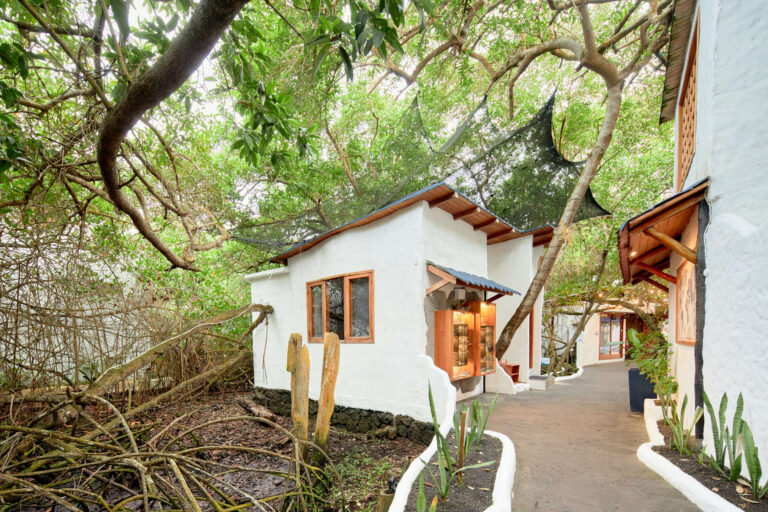
Traveling responsibly is the best way to celebrate Earth
On Earth Day, we are reminded of something essential: the way we inhabit and visit a place also shapes its future.
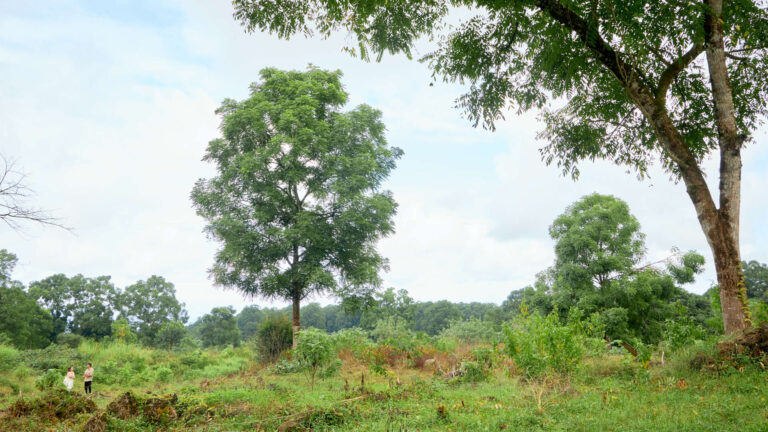
These islands need our respect. And that commitment does not begin here, nor does it end when we leave. It begins with every decision we make — even from our own homes.
Today, travel can also be a way to protect and inspire others around the world. And that — as we believe at Blu — is completely within our reach.